
When I heard the news about the deaths of six hostages, including Israeli-American hostage, Hersh Goldberg-Polin, my heart sank. I ached especially for Hersh’s parents, as I’ve seen them speak about their son a couple of times, most recently at the Democratic National Convention. (This is not a political post. Being a political news junkie, I watched both conventions.)
According to reports, these six hostages were killed only hours before their bodies were found. Imagine that they’d survived almost a year in captivity. (Hersh had his arm blown off by a grenade he’d tried to toss from a protective bunker on 10/7.) Imagine being his parents, knowing Hersh was suffering every single one of those days, and that he’d survived, until Hamas shot him.
He was still alive when they spoke at the convention.
Imagine.
I can’t even begin to fathom what it would be like to be a parent of a child who is being held hostage, especially by a regime that committed horrible atrocities against Israelis on October 7. If you watch the video, you can hear the pain in Hersh’s parents’ voices.
I have also seen countless news stories about the war in Gaza and have been heartbroken and horrified by the ongoing retaliatory attacks on the Palestinian people. as Israel hunts down Hamas.
I’m often surprised by the way the war in Gaza is presented as black and white. Either people think what happened on 10/7 was horrific, OR they think the retaliation against Hamas, conducted as a war against Palestinians is horrific. If you take the time to put yourself in the place of a person on either side, I don’t think a person could remain in a black and white stasis.
I think of the pain, anger and heartache of loved ones of those killed, raped, or kidnapped on 10/7. I also think of and hurt for the loved ones, especially parents, of the Palestinians who have been moved from place to place, who are now starving and thirsty, who are watching their children starve and become weak and sickened and who can do nothing.
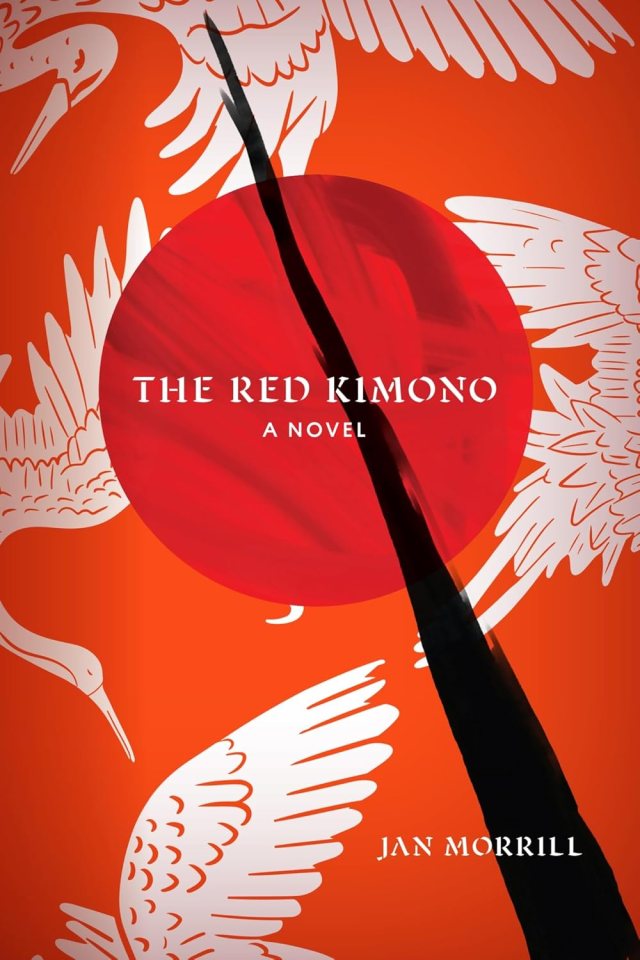
The greatest toll of war falls on the innocents. I wrote about a similar concept in my book, The Red Kimono. Here’s an excerpt. For context, this is a conversation takes place during World War II. It is between Terrence, the Black boy who killed a Japanese man because his father was killed at Pearl Harbor, and the man who will defend him, attorney, Edward Blake:
________________________________________________
Blake straightened, slapped his knees, and gazed at the ceiling, then cleared his throat. “When I was a young man—I’d just started my law practice in Berkeley—I received a telegram from my mother, asking me to come home to Arkansas. Said she had something important to tell me. Well, I knew she didn’t have much money. And for her to send a telegram, and with my pa off fighting in the First War, well, I had a bad feeling.”
He stood and started pacing. “So I wired Ma that I’d take the next train home. She met me at the station, and when I saw the look on her face, it confirmed my fears. Pa was dead. Killed by the Germans.”
He turned around and looked at Terrence. “I still remember the anger—no, the rage I felt. Thought I might go crazy for a bit.”
Hearing those words, seeing Blake’s piercing eyes, Terrence’s heart raced. Rage. Yeah, that’s just what he’d felt the day he learned the Japs killed Daddy.
“I couldn’t imagine not ever seeing Pa again. Couldn’t imagine Ma living alone,” Blake said.
Terrence understood the distant look in Blake’s eyes. Sorrow. Loss. Anger returned to the attorney’s face.
Blake continued, his voice hoarse. “I hated the Germans. Hated them! I wanted to go over there and kill every one ’em. But when we found out Pa was dead, the blasted war had just ended. There’d be no revenge.” He took a handkerchief from his pants pocket and wiped his forehead.
Terrence pressed his hands to his eyes to stop the burn of tears. He
could tell Mr. Blake still felt it. Did this mean the anger would never end? “How’d you get over it?” he asked.
Blake wiped his glasses. “The night of Pa’s funeral, my ma told me
something I’ve never forgotten. Countries may go to war, but that
doesn’t mean there needs to be a war between people.”
Between countries, not people. Was that why he didn’t feel better
after beating up a Japanese man? Matter fact, he felt worse. Now, he had sorrow and guilt. It was like swallowing bad medicine every time he remembered seeing the little girl’s eyes. Hearing her cries.
________________________________________________
War is between countries and governments, not people.
Perhaps I’m naïve. Those who are wiser and smarter than I have not been able to come to a resolution to end this decades-old off-and-on war. Still, I can’t help but feel it all might be resolved if those working to end it (or more particularly, those who refuse to end it), put themselves in the shoes of the innocents rather than remaining wrapped in a decades-old, foul cloak of right and revenge.



I’m not sure “like” is the correct response, but I’m glad you went where you did, sharing your thoughts and making us think as well. War is between government or groups and people do things as groups that the vast majority of them would never do as individual people. Governments also do things that they hopefully would never do as individual people, but power is a heady drug, one that often confers the sense of omnipotence and governments have the money and power to do what they will.
On a smaller scale, people in crowds can be just as scary, one reason I don’t really care for crowds, especially in situations where feelings/beliefs run high.
You make an excellent point about crowds, Janet. I think it’s important to get down to the individual’s level, to know the individual well enough to think twice before we let crowds, tribes, groups or governments, influence what we believe is right or wrong. An individual person is far more than a talking point.