We Are All “Others”

Lately, I’ve seen many disturbing social media posts that vilify, demean, shame, and lie about immigrants or people of different cultures, religions, political philosophies, sexual orientation — basically, anyone considered by some to be “the other.”

Most of these posts attempt to inspire fear of “the other.”

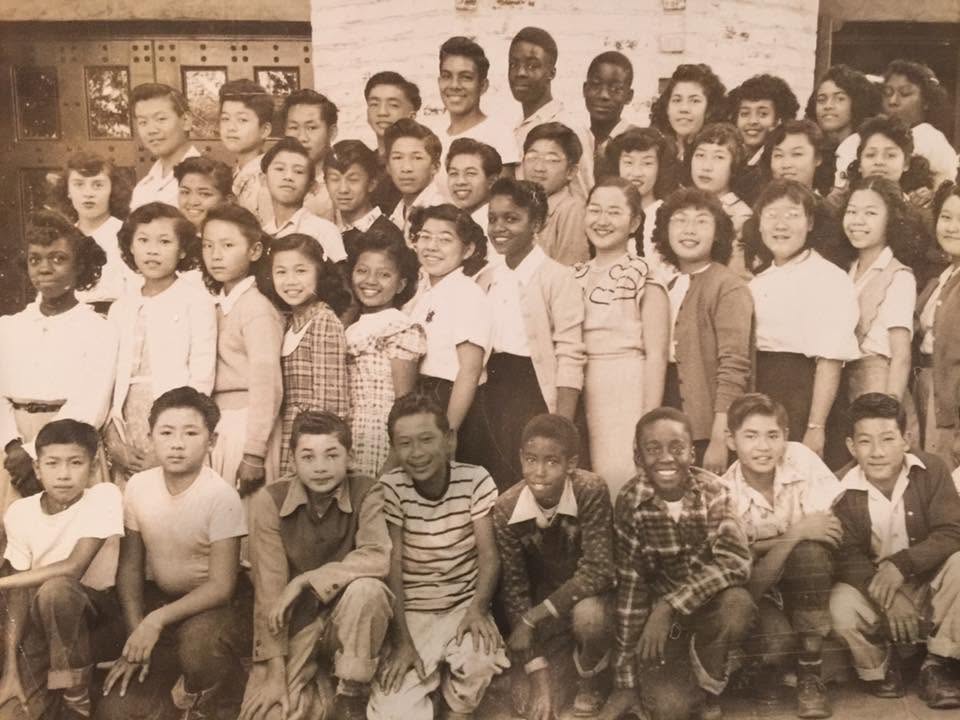
The fear-mongering, especially recently about Muslims, reminds me of the propagation of fear of Japanese Americans after the bombing of Pearl Harbor.
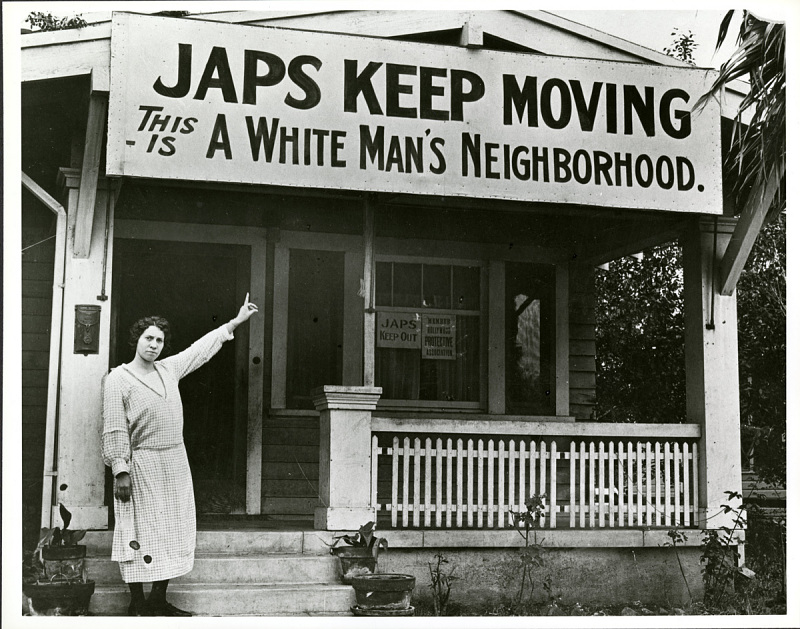
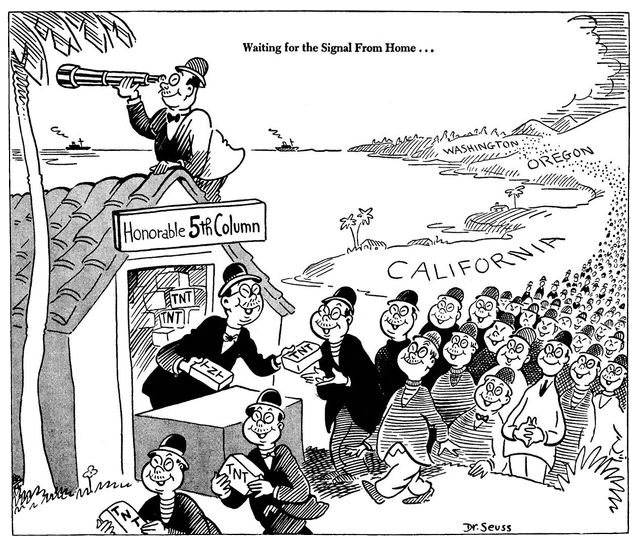
Common Racist RhetoricWorld War II Fear-Mongering

1. “Japanese Americans are spies waiting to strike. – Propaganda portrayed Japanese Americans as secret agents preparing sabotage on the West Coast. Dr. Seuss’s 1942 cartoon depicted them lining up to receive explosives, implying coordinated espionage. https://en.wikipedia.org/wiki/Propaganda_for_Japanese-American_internment

2. “They are a fifth column. – Shortly after the Japanese attack on Pearl Harbor, various prominent U.S. government officials, military leaders, journalists, and public figures—most notably, Secretary pf the Navy Frank Knox and General John DeWitt, Head of the Western Defense Command, falsely labeled Japanese Americans as a “fifth column” to justify wartime mass incarceration. https://encyclopedia.densho.org/The_Fifth_Column_on_the_Coast/

3. “A Jap’s a Jap — loyalty doesn’t matter. – DeWitt’s infamous statement asserted that race alone determined loyalty, implying that even U.S.‑born citizens were inherently dangerous. https://text-message.blogs.archives.gov/2013/11/22/a-slaps-a-slap-general-john-l-dewitt-and-four-little-words/

4. “They are racially unassimilable. – Propaganda framed Japanese Americans as biologically incapable of loyalty or assimilation, reviving older “Yellow Peril” tropes. https://digitalgallery.bgsu.edu/student/exhibits/show/race-in-us/asian-americans/the-asian-as-unassimilable-

5. “They are sneaky, secretive, and treacherous. – Hearst newspapers and other media described Japanese Americans as inherently deceptive, often using slurs and caricatures to portray them as untrustworthy. https://www.pbs.org/wgbh/americanexperience/features/citizen-hearst-japanese-incarceration/?utm_source=copilot.com

When the Japanese sunk as low as they did on Sunday morning they were closer to unreasoning animals than human beings… No longer will men condemn the actions of others by saying it was a “skunkish trick.” Much more damning will be the phrase “Of all the lowest Japanesish things to do.”
– “Lowest Animals Now Surpassed,” San Francisco Examiner, 12/11/1941

6. “They must be removed for national security. – Government films and posters insisted mass incarceration was necessary to protect the nation, even though intelligence agencies recommended targeted arrests instead. Propaganda claimed Japanese Americans maintained secret allegiance to Japan, ignoring FBI findings that the community was overwhelmingly loyal.

Do any of the above photos or statements look or sound familiar? One need only substitute the nationality and it’s the same thing we’re hearing today.

This prompted me to research a variety of “others” targeted in the past. I put together the following table.
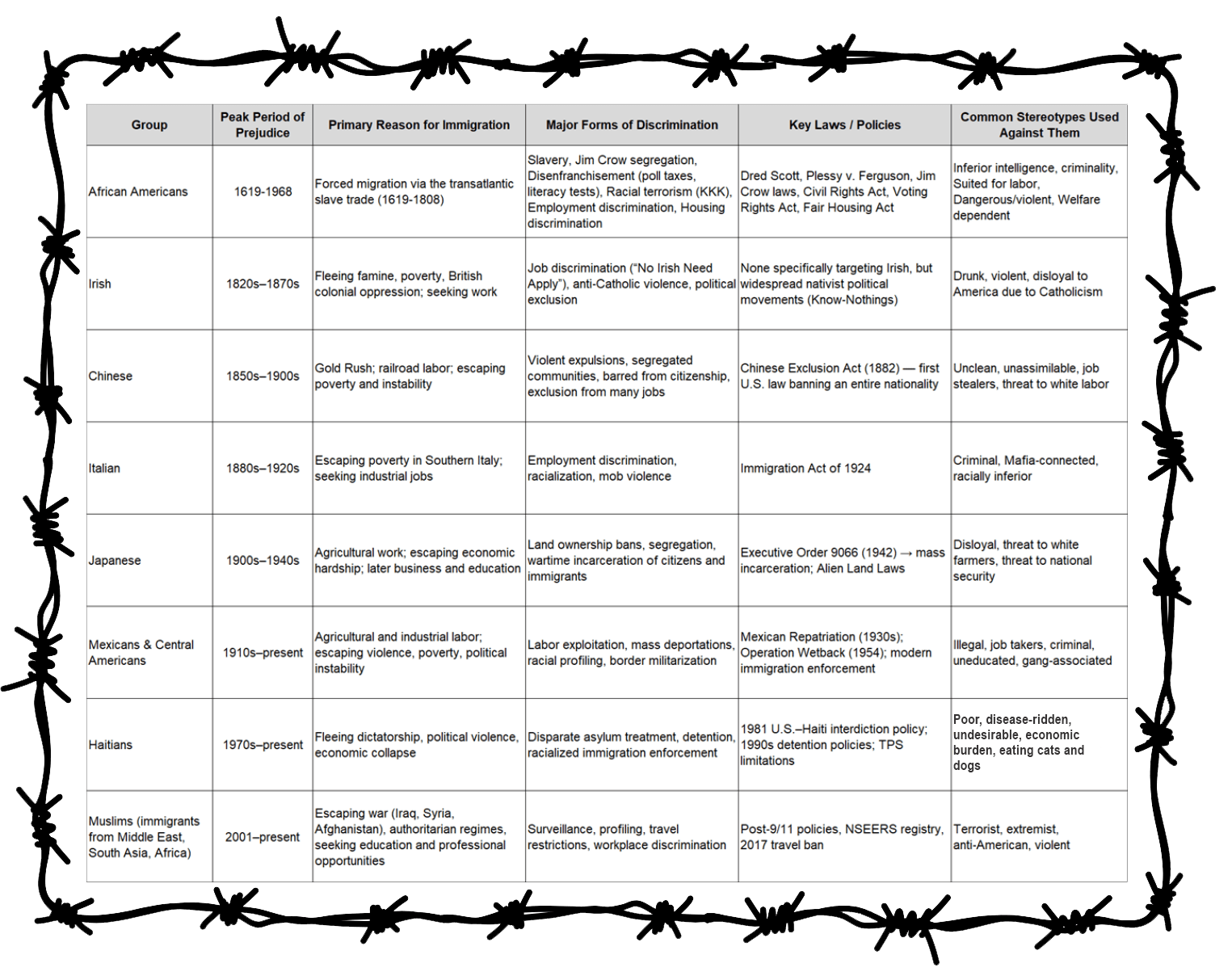
A few thoughts:

  1. As you can see by the table above, the ancestors of most Americans were once considered “the other” and endured the same kinds of prejudice and vilification as what’s happening today. Of course, this table can’t cover every group that endured injustices, like Native Americans, Germans, Jews, Palestinians, Vietnamese, etc. Nearly every major immigrant group as well as Indigenous peoples, have faced legal, social, or violent discrimination at some point in U.S. history.
  2. So much of the ugliness expressed is based on differences, whether political, religious, etc. Is someone evil or dangerous just because they are different or think differently?
  3. Is it true? Much of what’s on social media anymore is fake, and often, what’s fake has been created to inspire hate or fear — like last year’s “Haitians are eating your cats and dogs.” I trust very little of what I see on social media anymore without checking a reliable source, especially before passing it on.
  4. If a claim targets an ENTIRE group, ask who benefits from it. 120,000 Japanese Americans were interned during World War II as a result of the rhetoric inflaming the same kinds of fears I see happening today with Muslims and other people of color: “They’re going to take over our country.” No Japanese American was ever charged or convicted of espionage or spying during World War II.
  5. Knowing most of us have backgrounds where our ancestors, too, once endured injustices, what if we “returned to those shoes?” In other words, what if we tried to empathize with these people — think about their stories and who they really are, not what social media memes claim they are?

Every person has a story as complex as our own.

Photo by Dorothea Lange / National Archives and Records Administration

For more information on this video, read “Ankle monitors, arrests and lost jobs: Inside the new realities many Haitians in the US are facing.

I often think about our history — at best, our unwillingness to accept; at worst, our vile hatred of — “the other,” and a Bible verse my dad taught me, Mark 12:31, comes to mind:

Love your neighbor as yourself.

There is no qualifier in this verse. No “Love your white neighbor,” or “Love your Christian neighbor,” or “Love your Democrat or Republican neighbor,” or “Love your U.S. Citizen neighbor.”

I wonder where we’re headed as a nation. In my opinion, hatred will destroy this country before anyone considered “the other” will.

Posted in racism, History, immigration, politics, social media, society | Tagged , , , , , , , , | Leave a comment

Prell & Pork Chops

This morning while Steve and I were walking Obi, he noticed a car in a neighbor’s driveway with a California tag.

“They sure came a long way,” he said.

Immediately, memories started pouring through my mind as I replied, “We used to make that trip every couple of years from California. We came to Kentucky to visit my grandparents, then we drove up to Ohio to visit my Uncle Randy and Auntie Sue.”

Obi stopped to “do his business.” As Steve stooped, green poop bag in-hand, he said, “You drove all that way? With five kids?”

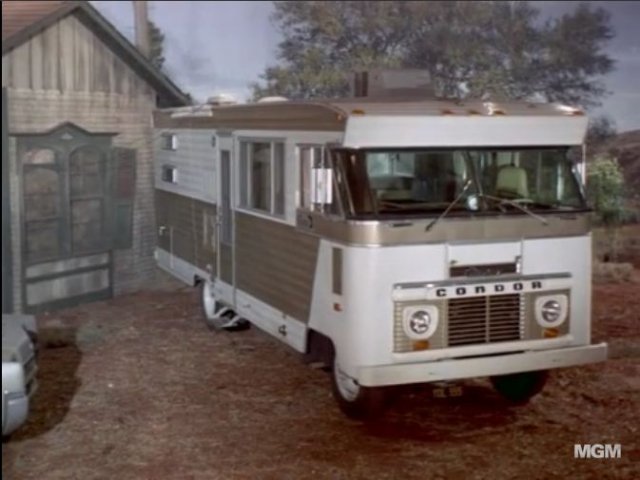
“Yep,” I replied, once again in awe of my father’s patience during those trips. “We made several trips in a station wagon, then later in a Condor motor home.” (The pictures below are not mine, but these photos are identical to what our station wagon and Condor looked like.)

I’ve written about my dad’s patience on those trips in a story called “Planet Condor.” I’ll share it below. What I’ve often thought about, but have never written about, is all the preparation my mom did before these trips.

I started to feel a little guilty that I’ve never outwardly recognized the Herculean efforts it must have taken to get five kids, a dog, and my dad ready for a cross-country trip. I’m pretty sure that’s why she often had a migraine in the first days of the trips.

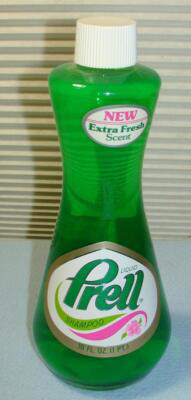
“My mom was so creative,” I said as I recalled one of many clever ideas she had that helped to make the trip pleasant for everyone. “She used to save shampoo bottles for us to drink from while in the car.” Side note: This was in the 1960s and 1970s, long before Juice Boxes or Capri Sun Juice Pouches!

One-by-one, memories of my mom’s pre-trip prep work popped into my mind.

I could almost taste the pork chops she used to cook the day before our departure, smell the garlic and hear the spatter as they cooked in the cast iron pan. She always used bone-in pork chops. Not only were the bones convenient “handles” to make it easier for us to eat in the car, they also became “pork chop” suckers once all the meat was gone.

After all five of us kids had battled for who got the window seats and who got the “far, far back” seat, Dad would pull out of the driveway. Before we were even on the highway, my mouth would begin to water, as I anticipated the pork chops waiting in the ice chest at my mom’s feet.

I’m not sure what they heard more:

  • I’m hungry! When can we eat?
  • When will we get there?
  • I have to go the the bathroom!
  • Mom, she hit me!
  • There’s a Stuckey’s! Can we stop?

Back to my mom’s ingenuity. Before packaged hand wipes or hand sanitizer existed, Mom made her own. During her pre-trip preparations, she’d cut Handi Wipes into small sheets, soak them in Sea Breeze, and pack them into Tupperware containers to be placed in the ice chest.

These cool wipes were not only good for cleaning pork-chop-smeared-fingers, they were excellent wipes to cool us when the temperatures soared on summer trips. Perhaps most importantly, when my dad began to show signs of getting sleepy (opening the window, shaking his head, or starting to sing “Row, Row, Row Your Boat — yes, he’d demand we sing with him) my mom would pull one out of the ice chest and insist he wipe it over his face and neck. The coolness on his skin and invigorating scent must have been a good pick-me-up! (Even though he still insisted we sing along with him.)

Mom used to like to dress us all alike. She often sewed dresses for the four girls and bought a matching outfit for my brother, the youngest. I fondly remember one traveling outfit she made for my sisters and me — hand-sewn summer dresses made of bright orange and pink parachute-type material. Each night in the hotel, she would wash these dresses in the bathroom sink and they’d be dry by morning. My brother wore an orange polo shirt and khaki shorts. I don’t remember what my parents wore, but knowing my mother, they were coordinated, too. I wish I could find a photo of us in those outfits, but for now, the photos below give you an idea of how well-coordinated we were!

As with many memoirs, much of my memoir revolves around my mom’s and my relationship. At times, particularly during my childhood and teen years, our relationship was rocky, and I often wonder if I’ll ever have the courage to have the story published. As with the story, Planet Condor, below, much of my memoir is written from the point of view of a child or teenage, who has little understanding or even compassion for the challenges my mom must have gone through. But know that I loved my mom, and would not want anyone to think otherwise.

With any writing I do, whether fiction or non-fiction, I always put myself into my characters’ shoes. It’s a necessity for a writer who wants to create characters with whom readers can identify.

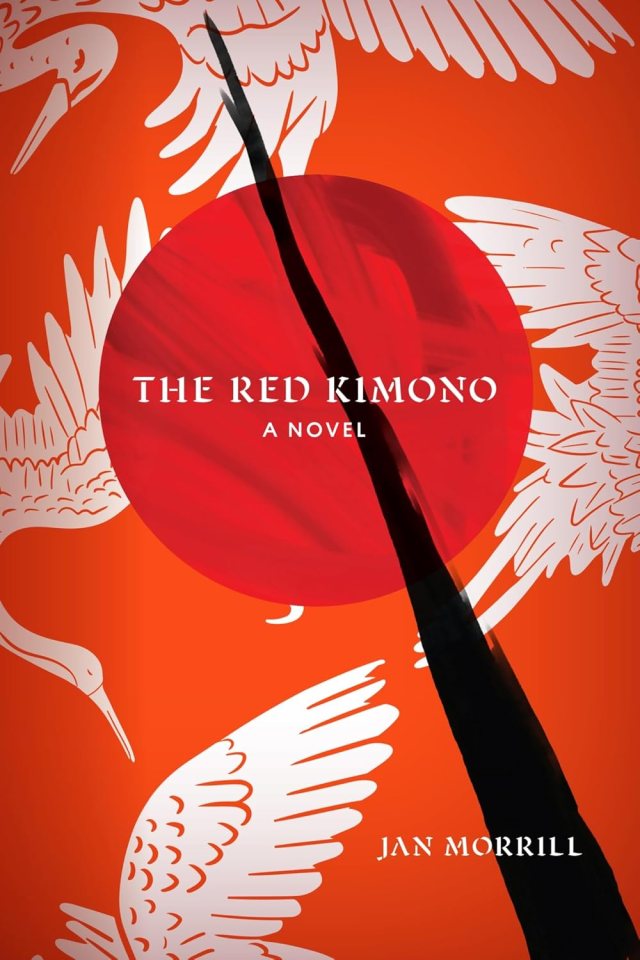
Putting myself in the shoes of the characters in The Red Kimono and its sequel, Shadow of the White Chrysanthemum (Spring 2027 release date, University of Arkansas Press), helped me to understand how being an internee as a child must have affected my mom throughout her life, and therefore, how it affected me and my other siblings.

Now, as I am working on my memoir, I put myself in the shoes of my mom. I have begun to understand her better, to see the challenges of raising 5 children, often on her own while my father was on trips for the Air Force, all while dealing with the lingering after effects of internment.

So, whether the story is ever published or not, writing it has been beneficial. I better understand my mother, and therefore, I better understand myself.

“You know,” I said to Steve as we continued our walk and conversation. “My mom was a smart and creative woman.”

It felt good to recollect everything my mom did to prepare for our family trips. They have given me some of my happiest memories.

__________________________________________________________

Planet Condor

In the summer of 1972, my four siblings and I stood like sentries in our driveway, waiting for our father to arrive in our new motor home—a 1971 Ford Condor.   In my little girl impatient world, he seemed to take forever, but finally, FINALLY, the corrugated white box on wheels turned the corner, our goliath chariot.  The five of us jumped up and down in unsynchronized delight, clapping our hands and squealing with anticipation.

When Dad pulled into the driveway, I beamed with pride.  Surely we were the first in the neighborhood to have a motor home.

He stopped the engine and poked his head through the window.  “All aboard!”

We burst through the entryway to a chorus of “oohs” and “ahhs” for the interior’s olive green plaid upholstery and dark wood-paneling – that unmistakable look of the 1970’s.  But, it didn’t take long for that joyous chorus of excitement and awe to turn to shouts of staking claim to the myriad seats and beds.

“I get the seat by the window.”

“No way.  I got it first.”

“Top bunk is mine.”

“Uh-uh.  I claimed it first.  Mommy!” 

A week later, five eager kids, two wary adults and a newly-bathed dog piled into the Condor, and we each took the seats we’d won in battle.  Our first adventure was an 1800-mile trek from California to Kentucky to visit Grandma and Grandpa.

Halfway into the trip, Mom was attacked by one of her infamous migraines – headaches so bad they crippled her for days.  Her only solution was to pop a prescription pain killer cocktail after which she passed out in back of our house-on-wheels.

Dad dealt with it with his usual patience, half-escaped in a daydream as he drove the Condor eastward, humming You Are My Sunshine to stay awake.

We kids had our own ways of dealing.  Those headaches might have led to Mom passing out, but they were like a shot of adrenaline to the pack of five.

Like the day we came up with the brilliant idea to see if we could tip the Condor over while Dad drove along Route 66.  All five of us flung our bodies from port to starboard and back again, like wild electrons bouncing off the walls.  As we crushed back-and-forth with our combined weights, we caused a good jerk, but we never did tip it over.

Dad kept his nose to the steering wheel, apparently oblivious.  Mom, under the influence of a medically-induced nonchalance, didn’t seem to care either.  And their five children?  We were hardly sympathetic.

We were bored, bored, bored – not a good thing on Day Three of a five-day trip.  We rummaged through drawers, cabinets, and glove compartments for things to do, and found Mom’s nylon hosiery.  Pulling them over our heads, we looked like juvenile bank robbers.  In the closet, we found Mom’s Twiggy wigs and put them on.  The Fab Five – a bad imitation of the Beatles.

We looked odd, but not odd enough.

“Here’s some oranges,” my brother said, his head poked in the mini-fridge.  It was just the touch we needed – orange bug-eyes!  We stuffed them under the nylons and over our eyes, and voila!  An appearance to match our behavior – creatures from another planet.

When the time came to share our talents with fellow-travelers on adventure’s highway, we each took turns at the stern of the Condor, where our stage was a large square window to the outside world.  Our audience was any car “lucky” enough to drive behind us.  Each of us took our place atop the toilet and performed, bouncing our heads back and forth like bobble-heads from Planet Condor.  Our sides ached with laughter at each performance, while we mentally calculated how to outdo the previous act.

Dad kept driving, trying to distract us by encouraging a round of Row, Row, Row Your Boat.

Mom kept sleeping.

That night, as we settled into an RV Park in Oklahoma, lucidity began to return to our mom, though she remained hazy from the residual medication.  Trapped with her alien children in a now too-tiny box for three days, she was ready to leave Planet Condor.

Dad, however, suggested her night gown was probably not the appropriate attire for going out.  Alas, this was lost in translation.  She demanded he take her out to dinner or she’d walk home.

My youngest sister asked, “Daddy, isn’t it too far for Mommy to walk from Oklahoma to California?”

The next morning, the monster headache was gone, and Mom proceeded to pull travelling outfits she’d sewn for us out of the Condor’s tiny closet.  Dressed identically, we looked like the American version of the Von Trapp family singers when we arrived at Stuckey’s for breakfast.  By all appearances, we were the perfect family.  

Now that Mom was alert, we morphed from aliens to angels.  She expected and received perfect behavior.  After all, we each knew the wrath of her pinchy fingernails should get any ideas of returning to our alien forms.  No matter where we went, the lucky one sitting next to her was always the best-behaved.

After pancakes, scrambled eggs, a spilled orange juice and three trips to the restroom, we left the restaurant and prepared to hit the road again – two weary adults, followed by their five raring-to-go children.  There couldn’t be a more perfect-looking family on Earth.

But on Planet Condor, perfection didn’t exist. 

Posted in nostalgia, memoir, mom | Tagged , , , , | Leave a comment

The Pledge of Allegiance – Part 3: Liberty and Justice for All

In Part 1, I shared a video of my granddaughter, Penelope, reciting the Pledge of Allegiance. While listening, I was inspired to consider each phrase and what it means to me.

Part 1 – The Pledge of Allegiance: History

Part 2 – The Pledge of Allegiance: “I Pledge Allegiance”

Here’s Penelope’s video again:

The focus of my final post on the Pledge of Allegiance is on the phrase “with liberty and justice for all.” It’s the phrase that brought a lump to my throat as I listened to Penelope. I thought of all the times I’d recited the pledge, not seriously considering the words. I questioned how many of us no longer give the words a thought. How many times in our nation’s history have we disregarded the words, “with liberty and justice for all.”

I even wondered if one day my own grandchildren might be in a category of people for whom this promise will not be upheld. After all, it was not upheld for their great grandmother — my mom. Isn’t it true, that if “liberty and justice for all” is not upheld for one group, no group is safe?

As we approach our nation’s 250th birthday, it’s easy to be caught up in patriotism, to want to disregard the times in our history when we did not live up to our ideals. There are many of those times . . . and it continues today.

So, what do these words mean? Here’s a summary per legalclarity.org:

Liberty = freedom from unreasonable government restraint — including freedoms of speech, religion, assembly, press, and personal autonomy. These protections come from the Bill of Rights and are applied to the states through the Fourteenth Amendment.

Justice = fair treatment under the law, due process, and equal protection. This includes impartial courts, nondiscrimination, and access to legal remedies.

For all = these rights apply to every person, regardless of status, identity, or background. It is an aspirational and legal commitment to universal equality.

Of course, for me, the first instance that comes to mind of a failure to uphold “liberty and justice for all” is the internment of 120,000 Japanese, 2/3 of whom were American citizens. Yet, no Japanese American was ever convicted of espionage or spying during or after World War II.

A simple search for a “list of events over the last 100 years where ‘liberty and justice for all’ was not upheld” provides multiple events. Below, I’ve listed a few that affected my family, as well as events that occur in my historical fiction novels, The Red Kimono, and its upcoming sequel, Shadow of the White Chrysanthemum (Spring 2027, University of Arkansas Press):

  1. Immigration Exclusion and Targeting (1924–present) – From the Asian Exclusion Act to post‑9/11 surveillance, immigrants have repeatedly been treated as suspect. Due to provisions in the Naturalization Act of 1790, Issei, or the first generation of Japanese to immigrate to the United States – my grandparents – were not allowed become American citizens until 1952.
  2. Japanese American Incarceration (1942–1945) – 120,000 people of Japanese ancestry — two‑thirds U.S. citizens — were forcibly removed from their homes and imprisoned without charges or trials. No Japanese American was ever convicted of espionage, yet the government justified mass incarceration on “military necessity.” Densho.org
  3. School Segregation (1954–1970s) – Even after Brown v. Board, many districts refused to integrate.
  4. Segregation and Jim Crow Laws (through the 1960s) – Black Americans were denied equal access to schools, transportation, hospitals, and public spaces.
  5. Anti‑Miscegenation Laws (until 1967) – Interracial marriage was illegal in many states until Loving v. Virginia. My parents’ marriage was considered illegal in many states when they were first married.

I do not present this list to dishonor the United States of America, especially as we approach her 250th birthday. I see it as “tough love,” just as it would be “tough love” for me to have a difficult conversation with my husband, children or grandchildren.

To fully love our country, we must accept it as it is, with its flaws as well as its beauty. In my own life, I’ve learned my greatest lessons through mistakes I’ve made. I believe it can be the same with our country. But first, we must remember the mistakes of our past, and recognize the mistakes of today.

Posted in History, 4th of July, Civil Rights, Excerpt, flag, internment, Japanese-American | Tagged , , , , , | Leave a comment

The Pledge of Allegiance – Part 2: I Pledge Allegiance

Today, June 14, is Flag Day. Generally, I know the meaning of Flag Day, but I looked it up anyway and found more detailed information on the Almanac.com. Here are a couple of interesting tidbits:

  • On June 14, 1777, the Continental Congress adopted the Stars and Stripes as the official flag of the United States of America.
  • As a child, I learned Betsy Ross sewed the first flag. According to Almanac.com, there is “no true proof of this,” although she did sew pennants for the Philadelphia Navy, and some of those designs may have been incorporated.
  • Now that I’m an Ohio resident, I found this the most interesting:

The current American flag was designed by a high school student from Lancaster, Ohio, named Bob G. Heft! Even though Bob’s history teacher gave him a “B-” for not knowing how many states the Union had, Bob submitted his design to the White House (unprompted) in anticipation of Hawaii and Alaska joining the Union. To his surprise, President Eisenhower called him! Today, it’s Bob Heft’s 1958 design—showing 50 stars in a field that included five rows of six stars and four rows of five stars—which is now our 50-star American flag (and his history teacher changed his grade to an “A”!)

As I mentioned in Part 1, listening to my granddaughter recite the Pledge made me think of all the times I’ve recited the words with little thought as to their meaning.

In this post, I’ll focus on what the words, “I pledge allegiance to the flag of the United States of America. . .”

Dictionary.com defines “allegiance” as:

Allegiance became provocative to me, following my research for The Red Kimono. Whereas I used to recite the word with little thought, now, I wonder about allegiance being a two-way street.

Have you heard of the Loyalty Questionnaire, a document Japanese Americans over the age of 17 were required to complete? (Most of these internees were American citizens.)

One particular question, #28, included the word “allegiance:”

This question was required to be answered by Japanese Americans, again, most of them citizens, who were already interned (imprisoned) as possible enemy aliens by their own country.

The Issei (first generation immigrants), were not allowed to become citizens due to provisions of the Naturalization Act of 1790, which restricted citizenship eligibility to “free white persons . . . of good character.” Yet, the Issei were being asked to “swear unqualified allegiance to the United States of America,” and to “forswear any form of allegiance or obedience to the Japanese emperor . . .” Answering “Yes” to this question would leave the Issei without a country.

Shouldn’t true allegiance be reciprocal? Historically, allegiance only works when both sides uphold their part. Yet, there have been many instances throughout our history where allegiance has not been a two-way street. The internment of Japanese Americans is only one. A simple Google or AI search will provide you a list of many others.

I honor the flag and the country for which it stands. For me, part of honoring them both is remembering the the stain of our history as well as the glory. And it’s considering the meaning of each word of the Pledge of Allegiance.

Posted in flag, internment, Japanese-American, patriotism | Tagged , , , , , , , | Leave a comment

The Pledge of Allegiance – Part 1: History

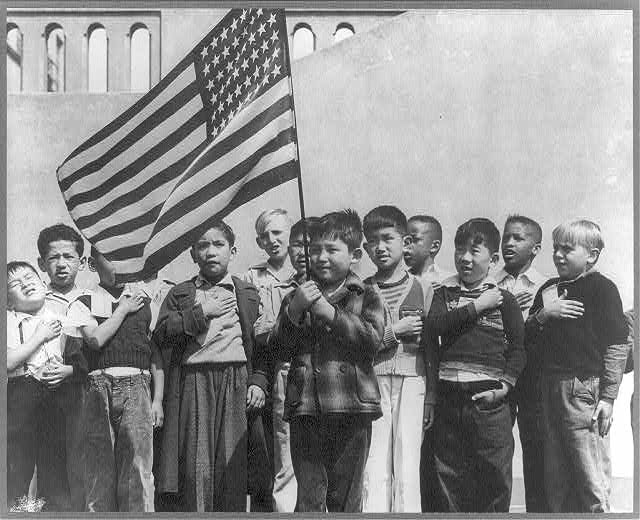
A group of diverse boys standing outdoors, some with hands over their hearts, while one boy holds a waving American flag.
Library of Congress (Dorothea Lange)

During a recent trip to visit my daughter and her family, my granddaughter, Penelope, was excited to show me that she’d learned The Pledge of Allegiance.

As I watched and listened, I wondered how long it had been since I recited the pledge — decades? Penelope is only 3 (though she always insists I add, “and-a-half!”), so I’m pretty sure she doesn’t understand the meaning behind the words. Admittedly, nor did I when I first memorized the pledge. My fellow classmates and I would rotely recite the words each morning, with hardly a thought to their meaning.

But as I listened to Penelope, several phrases caught my attention and inspired me to think more deeply about the pledge. So, over the next couple of weeks, as we approach the 250th anniversary of our independence, I’ll post my thoughts on a few of those phrases.

I’ll start with a post about the history of the Pledge of Allegiance.

The very first pledge was written in 1885 by Union Army officer, Captain George Thatcher Balch:

“We give our heads and our hearts to God and our country; one country, one language, one flag.”

According the History.com, “Several schools adopted Balch’s pledge, but it was soon supplanted by a salute composed by Francis Bellamy, a Christian socialist and former Baptist minister. In 1892, while working for a magazine called The Youth’s Companion, Bellamy was enlisted to write a new pledge for use in patriotic celebrations surrounding the 400th anniversary of Christopher Columbus’s arrival in the New World. The magazine partnered with schools to encourage flag ceremonies and sold American flags as part of the initiative.”

Even Bellamy’s version underwent many changes over the years:

Interesting Tidbits:

  • According the History.com, prior to 1942 when Congress officially adopted the pledge and decreed it should be recited while holding the right hand over the heart, the pledge was recited using a “Bellamy salute,” where the right arm was extended toward the flag with the hand outstretched. Sound familiar?

. . . but with the rise of fascism in Europe, many felt the gesture too closely resembled a Nazi salute. ~ History.com, Evan Andrews

  • Today, 46 states require public schools to recite the pledge. The four states that do not are Hawaii, Iowa, Vermont, and Wyoming. (SmithsonianMag.com, Amy Crawford)
  • In a case brought by Jehovah’s Witness families in 1943, (West Virginia State Board of Education v. Barnette,) the U.S. Supreme Court ruled that public schools could not force students to recite the pledge or salute the flag.

UP NEXT: Thoughts on the phrase, “I pledge allegiance to the Flag . . .”

Posted in Family, 4th of July, children, flag, Grandparenting, patriotism, Pledge of Allegiance | Tagged , , , , , , , | 4 Comments

National Poetry Month – Gratitude

Thank you again to all who participated. I’ve drawn the name of the winner — Dr. Robb Scott. (He certainly had the best chance of winning with the number of haiku he shared!)

Thank you to Robb and to all who shared your haiku. I sincerely enjoyed reading them all, and hope you’ll continue to write them!

A seagull perched on a wooden post at the beach, overlooking a foggy ocean with distant rocky islands, alongside a poetic text expressing gratitude for shared haikus.

New to writing haiku? Here’s the pattern:

Three lines with a total of seventeen syllables:

5 syllables
7 syllables
5 syllables

Posted in Grandparenting, Haiku | Tagged , | Leave a comment

National Poetry Month – Day 30: Time

Happy Day 30 of National Poetry Month. I’ve enjoyed counting syllables each day — it’s been good brain exercise!

I’ve especially enjoyed reading the haikus of those who shared them. I hope you’ll continue to write them.

This last haiku was inspired by all the ways I think about how quickly time flies. This is especially true as we watch our granchildren growing up!

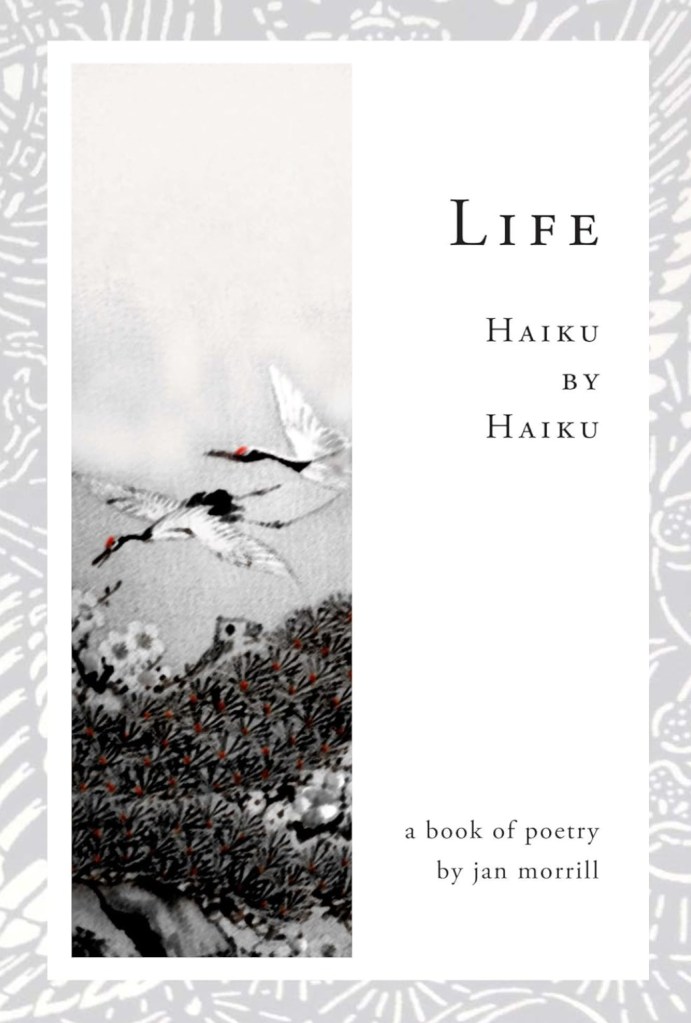
Today is your last chance to share a haiku for a chance to win a copy of my book, Life: Haiku by Haiku. I’ll draw tomorrow morning and will announce on this blog.

Thank you again to all who participated!

A woman and a girl sharing a drink with two straws, smiling and leaning towards each other, surrounded by a sunny outdoor setting.

New to writing haiku? Here’s the pattern:

Three lines with a total of seventeen syllables:

5 syllables
7 syllables
5 syllables

Anyone who shares a haiku in the comments is entered into a drawing to win a copy of my book, Life: Haiku by Haiku!

Posted in Grandparenting, Haiku | Tagged , , , , | 1 Comment

National Poetry Month – Day 29: Nature

Nature stimulated our minds long before social media did. I admit to sometimes scrolling mindlessly, sometimes getting caught up in the disagreement of the day, though I usually end up hitting “delete” before “send!”

But for me, getting out in nature restores what social media has stolen. So, Nature was my inspiration for Day 29’s haiku.

As always, if you share your haiku in the comments of this blog, you might win a copy of my book, Life: Haiku by Haiku!

A close-up of a purple flower with a bee perched on it, overlaid with the text: 'No algorithms, no fakes, tribes, or emojis the buzz of a bee.'

New to writing haiku? Here’s the pattern:

Three lines with a total of seventeen syllables:

5 syllables
7 syllables
5 syllables

Anyone who shares a haiku in the comments is entered into a drawing to win a copy of my book, Life: Haiku by Haiku!

Posted in Haiku, Nature | Tagged , , | Leave a comment

National Poetry Month – Day 28: Unrequited #3

As I mentioned in my Day 16 haiku post, before the end of National Poetry Month, I would post a haiku for each of the three men in my life who I consider the “Unrequiteds” in my memoir-in-progress.

I’ll admit, the haiku for Unrequited #3 is not a new one. I wrote it for him not too long after we broke up. There’s no reason to write a new one, because I’ve always thought this one captured “us.”

It’s the most difficult haiku to post, too, because the truth is hard to face, even twenty-five years later. It’s true, and it’s tragic. Because now, he’s gone.

Three martini glasses filled with clear liquid and green olives, with a poetic text overlay about love and intoxication.

Unrequited #1 Haiku

Unrequited #2 Haiku

______________________________________________________________

New to writing haiku? Here’s the pattern:

Three lines with a total of seventeen syllables:

5 syllables
7 syllables
5 syllables

Anyone who shares a haiku in the comments is entered into a drawing to win a copy of my book, Life: Haiku by Haiku!

Posted in Haiku, Love, memoir | Tagged , , , , | 2 Comments

National Poetry Month – Day 26: Batgirls

We’re getting to the last couple of days of National Poetry Month, and I just want to have a little fun. So tonight, I’m sharing a photo that always makes me smile, even if the two Batgirls aren’t smiling. This, of course, inspired the last line of Day 26’s haiku, which is my subtle commentary about recent news stories about women being told they should smile more, often by grumpy old men. 🙂

As always, if you share your haiku in the comments of this blog, you might win a copy of my book, Life: Haiku by Haiku!

Two elderly women dressed as Batgirls in a pink vintage car, looking serious while wearing sunglasses and colorful costumes.

______________________________________________________________

New to writing haiku? Here’s the pattern:

Three lines with a total of seventeen syllables:

5 syllables
7 syllables
5 syllables

Anyone who shares a haiku in the comments is entered into a drawing to win a copy of my book, Life: Haiku by Haiku!

Posted in Haiku, laughter, Musings | Tagged , , , | 5 Comments